


Colorectal cancer is the third most common cancer in the world and the second leading cause of cancer death, and it is also one of the few cancers with a step before cancer. It usually begins as a growth on the lining of the colon, takes years to become malignant, and can be removed while it is still that growth. That single fact is why it keeps being called preventable.
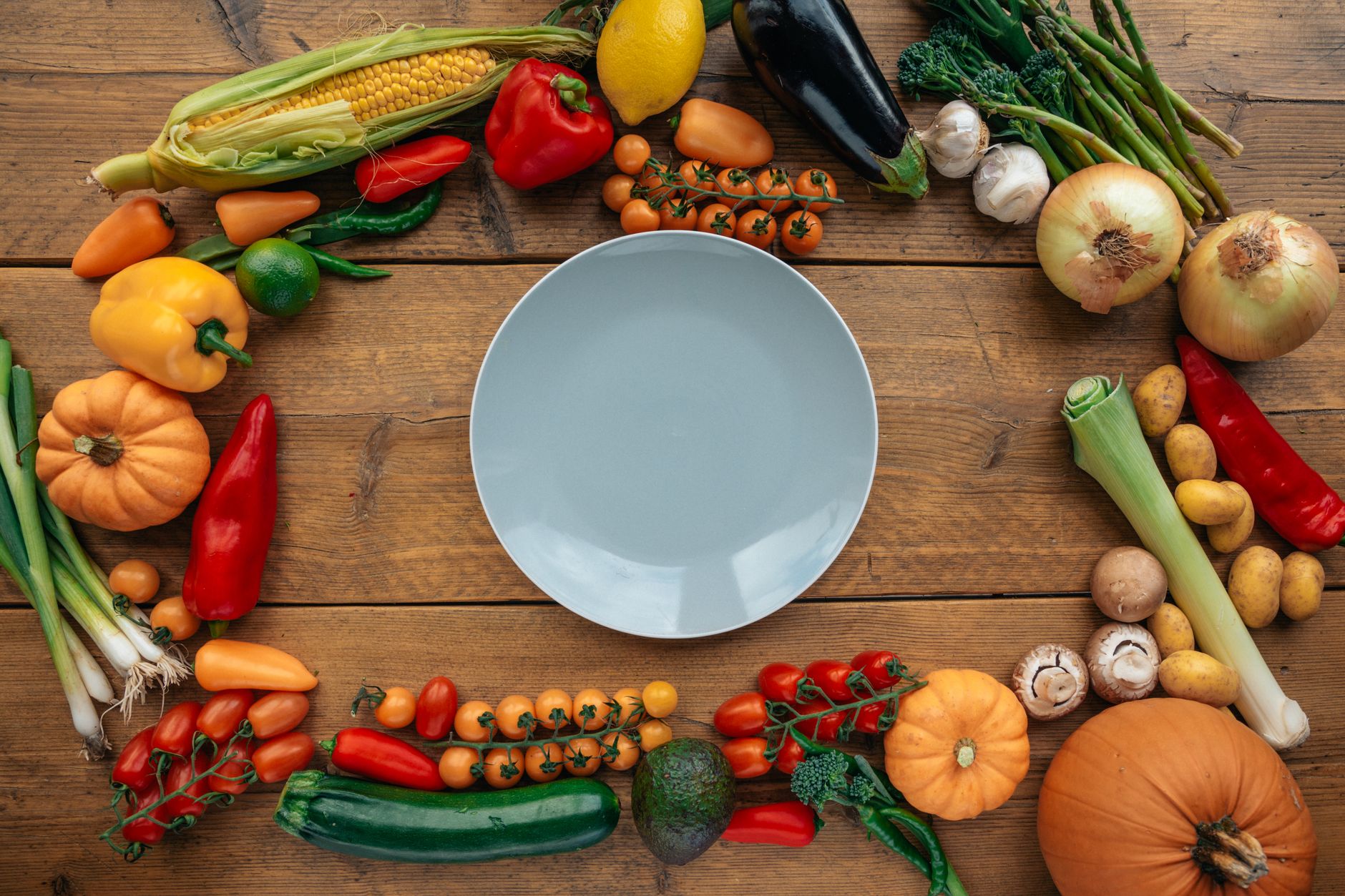
The rest is less dramatic than the headlines suggest. No food prevents cancer, no supplement substitutes for a plate, and the habits that show up in the research are ordinary: what you eat most days, how much you drink, whether you smoke, how much you move, and whether you turn up for screening. This guide takes the claims one at a time and says which ones the evidence actually supports.
“Prevent colon cancer naturally” — short answer:
Risk is shaped mostly by things you can influence: body weight, how much red and processed meat you eat, alcohol, smoking, and how much you move. Fiber matters because gut bacteria ferment it into butyrate, which the cells lining the colon use as fuel. The one thing you schedule rather than build is screening, which for average-risk adults starts at 45. No single food prevents cancer, and nothing here is a guarantee.
Key terms, defined
Colorectal cancer: cancer that begins in the colon or the rectum, usually as a growth on the inner lining that becomes malignant over years rather than days. Because that progression is slow, it is one of the few cancers with a detectable and removable pre-cancer stage.
Polyp: a growth on the lining of the colon. Most are harmless, while some adenomas are the stage before cancer, and screening exists largely to find and remove them. That is why the test is offered to people who feel entirely well.
Gut microbiome: the community of bacteria and other microbes living in the colon, with species doing very different jobs. Its composition responds to what you eat within days, and the fermentation of fiber is one of the main ways it interacts with the cells that line the gut.
Butyrate: a short-chain fatty acid made when gut bacteria ferment certain fibers. One 2024 review describes it as preferentially used as an energy source by the colonic epithelium, which makes the fiber you eat fuel for the very cells that have to stay healthy.
Dietary fiber: the parts of plant foods your small intestine cannot digest. They pass to the colon either to be fermented by bacteria or to add bulk to stool. Adults need roughly 25 to 35 grams a day, and most people eating a Western diet get about half that.
Key Takeaways
- It is one of the most preventable cancers because it grows slowly through a polyp stage, which is what screening is designed to find and remove.
- The listed risk factors are mostly daily habits: excess weight, a long-term diet high in red and processed meat, alcohol, smoking and physical inactivity.
- Fiber works through bacteria. Fermentable fiber feeds gut bacteria, which produce butyrate — the preferred fuel of the cells lining the colon.
- Variety beats any single food. Different fibers feed different bacteria, which is why vegetables, fruit, legumes and whole grains are grouped rather than ranked.
- Screening is a schedule, not a symptom. Average-risk adults start at 45; earlier or more often is a conversation with a doctor, not a decision from a blog post.
- None of this is a guarantee. It is risk reduction, and it stacks with the screening you are offered.
Why Colorectal Cancer Is Called Preventable
The number is genuinely large: WHO describes colorectal cancer as the third most common cancer worldwide and the second leading cause of cancer-related deaths, with roughly 1.9 million new cases and more than 900,000 deaths in 2022 alone. A disease of that size with a slow, detectable pre-cancer stage is unusual, and it is the reason screening exists as a population programme rather than a test for people who feel unwell.
Preventable is still the wrong word if you read it as certain. Screening finds growths and removes them, which reduces the chance of cancer developing — that is prevention in the clinical sense. Screening also finds cancers earlier, which is detection, not prevention, and the two get conflated constantly. Both are worth having, and neither is a guarantee.
For average-risk adults the schedule is a guideline rather than a judgement call: the US Preventive Services Task Force recommends screening from 45, grading the 45 to 49 band a Grade B, and selectively offer screening for colorectal cancer in adults aged 76 to 85 years based on health and screening history. Anything outside that is something to talk to a doctor about, because family history and symptoms change the schedule.
The Risk Factors You Can Actually Change
Read the American Cancer Society’s risk page and the pattern is blunt: most of what is listed is a habit. Excess weight raises the risk of colorectal cancer — with a stronger link in men — and a long-term diet that’s high in red meats and processed meats does the same, as does cooking meat at very high temperatures. Colorectal cancer has been linked to moderate to heavy alcohol use, and even light to moderate intake has been associated with some risk. Long-term smoking raises both risk and polyp formation. People with type 2 diabetes mellitus are more likely than people who don‘t have it to develop colorectal cancer, and they share several risk factors with it.
One factor on the American Cancer Society’s list is not a habit at all, which is why it is missing from the table above: Having a low blood level of vitamin D may also increase your risk. That is a measurement in the blood rather than a behaviour you choose, so it belongs in a conversation about testing rather than in a row of habits — and it is worth noticing that the same page pairs the finding with the eating pattern that probably lowers risk, which is the half you can act on.
The useful thing about a list of habits is that habits are where a person has leverage — and turning one into something that holds is its own skill: how to build a habit that lasts. The table below is the same evidence rearranged into the change each factor responds to — not a prescription, just the direction the research points.
| Risk factor | What the evidence says | The habit that shifts it |
|---|---|---|
| Excess body weight | ACS lists excess weight as a risk factor, with a stronger link in men; reaching and staying at a healthy weight may lower risk | Protein and vegetables at most meals, fewer sugar-sweetened drinks, and a walking habit you will actually keep |
| Red and processed meat | A long-term diet high in red meats and processed meats raises risk; very high-heat cooking creates chemicals that might too | Treat them as occasional rather than daily, and let beans, fish and poultry carry the rest |
| Alcohol | Linked to moderate to heavy use, and even light to moderate intake has been associated with some risk; ACS says it is best not to drink | Fewer drinking occasions, not just smaller pours — the pattern is what accumulates |
| Smoking | Long-term smokers are more likely to develop and die from colorectal cancer, and it raises the risk of polyps | Quitting is the single highest-value change on this table, at any age |
| Physical inactivity | The ACS guideline asks adults for 150-300 minutes of moderate activity a week and explicitly says to limit sedentary behaviour | Short walks after meals and two strength sessions a week clear the low bar comfortably |
| Type 2 diabetes | People with type 2 diabetes are more likely to develop colorectal cancer, and share several risk factors with it | The same levers as the rows above — this is the condition most sensitive to them |
Note what is not on that table: there is no row for a superfood, a cleanse or a supplement. The ACS guideline’s eating pattern is almost aggressively boring — vegetables, whole fruits, fiber-rich legumes (beans and peas), whole grains — with red and processed meats, sugar-sweetened drinks and refined grains limited or excluded, and It is best not to drink alcohol stated plainly rather than hedged.
What Fiber Actually Does in the Colon
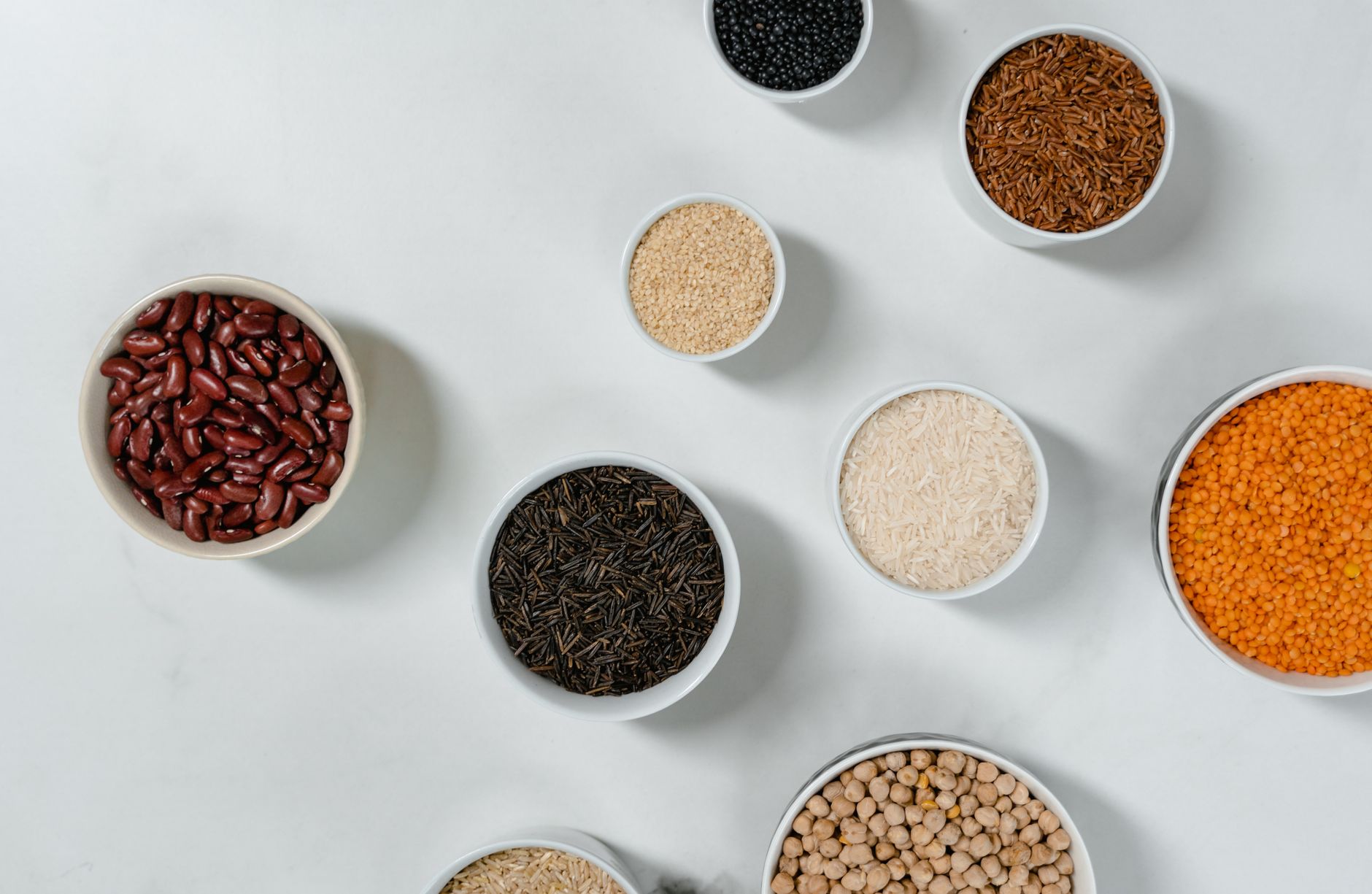
Fiber is the part of this story with the clearest mechanism, and the mechanism is bacterial. Harvard’s Nutrition Source sets the target at at least 25 to 35 grams of fiber per day for adults and points out that most Americans get only about 15 grams a day — roughly half. Two kinds matter for different reasons: soluble fiber dissolves and slows digestion, while insoluble fiber does not dissolve and instead helps add bulk and weight to stool so it is easier to pass.
The interesting half is fermentation. Some fibers are fermentable because it acts as food for gut bacteria, and the bacteria pay you back in short-chain fatty acids. Butyrate is the one that matters most for the colon: a 2024 review describes it as preferentially utilized as an energy source by the colonic epithelium. In plain terms, the cells lining your colon run on what your gut bacteria make from the fiber you did not digest.
That is the honest version of the fiber claim. It is not that fiber scrubs the colon clean, which is a folk model with no mechanism behind it. It is that fiber feeds a bacterial population whose output is the fuel supply for the tissue that has to stay healthy — and the review’s discussion of the butyrate shift notes that the composition of the fiber you eat selects for the bacteria that produce it.
Which brings up the part most fiber advice gets wrong: the number is a floor, not a target to optimise. Chasing 35 grams with one powdered source misses the selection effect above, because different fibers feed different bacteria. A week of varied plants does more for the bacterial population than a perfectly measured single supplement.
What the Numbers Look Like per 100 Grams
Fiber counts only mean something once the spread is visible. Every number below is the USDA FoodData Central value for 100 grams of the food, in the preparation that database measures — dry for oats, cooked for lentils — and that per-100-gram basis is why seeds and nuts sit so far above vegetables. A portion is not 100 grams, so read the column as a density ranking rather than a serving size.
| Food, as the database lists it | Fiber per 100 grams |
|---|---|
| Chia seeds, dried | 34.4 g |
| Almonds | 12.5 g |
| Rolled oats, dry | 10.1 g |
| Lentils, cooked | 7.9 g |
| Avocado | 6.7 g |
| Raspberries | 6.5 g |
| Whole-wheat bread | 6 g |
| Broccoli, raw | 2.6 g |
Values: USDA FoodData Central, SR Legacy entries retrieved in November 2026 (FoodData Central). Preparation matters as much as the food: the dry oat figure is not the number for a bowl of cooked porridge.
Building a Plate That Feeds the Right Bacteria
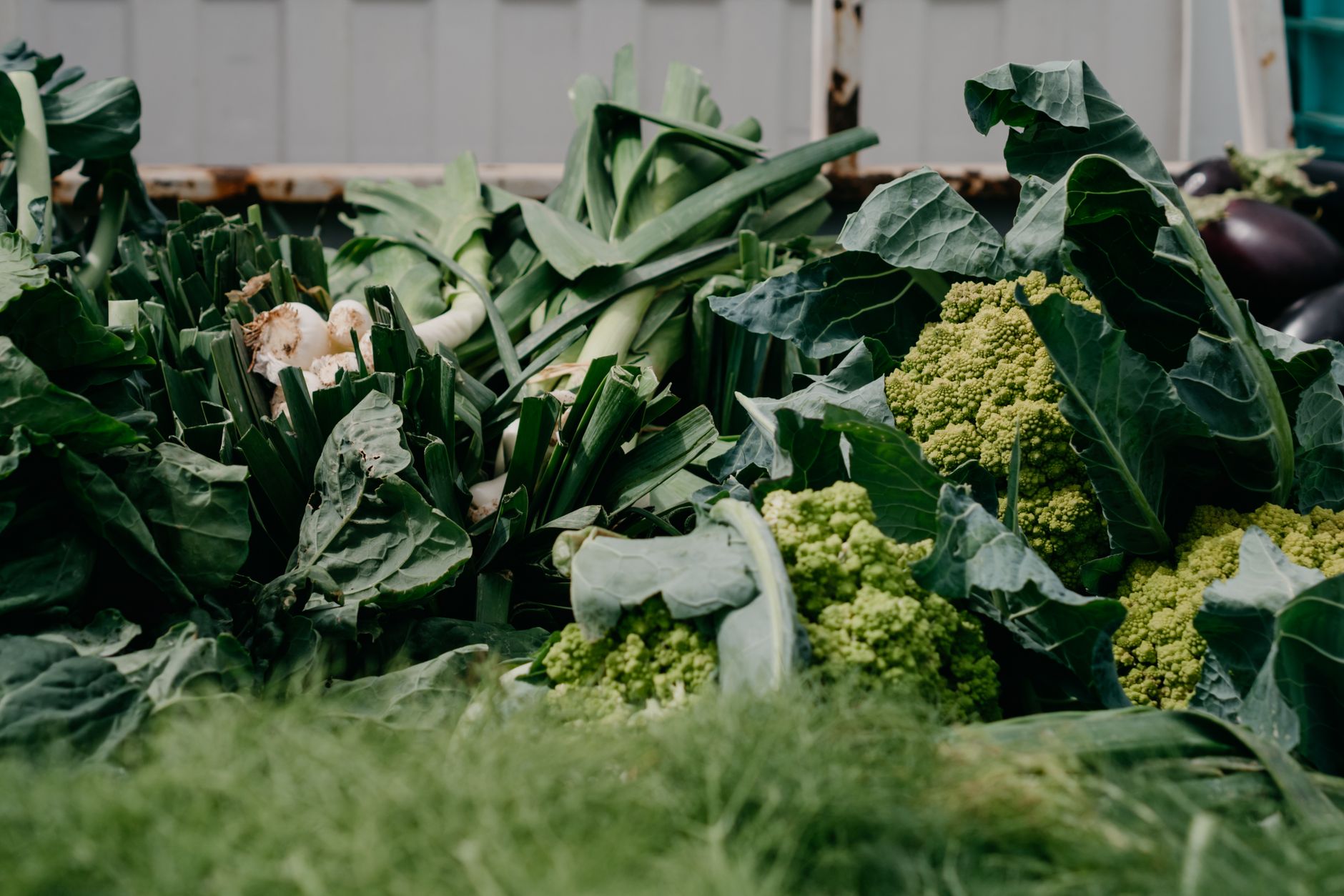
The plate is where the fiber argument becomes a shopping list, and the ACS pattern is the most defensible version of it because it was written for cancer prevention specifically rather than for weight loss or performance. Build most meals from vegetables — including the cruciferous ones, cabbage, broccoli and cauliflower among them — plus whole fruit, legumes and whole grains. Those are the fiber carriers, and the variety inside that group is the point.
Non-starchy vegetables deserve a specific mention because they do the most work per calorie eaten: leafy greens, peppers, courgette, mushrooms, tomatoes, onions. They add fiber and water without adding much else, which matters given that excess body weight is itself on the risk list. A plate that is half vegetables is not a diet rule here; it is the simplest way to raise fiber and lower energy density at the same time.
Then the protein and fat question, where the internet is loudest and the guideline is quietest. The ACS pattern is plant-forward, with red and processed meats limited or excluded and highly processed foods and refined grains limited too. That is the entire instruction — it does not require any particular macronutrient split, and it certainly does not require the fat-and-animal-protein-heavy version that circulates in wellness videos. If a source tells you to build your plate around those instead of plants, it is not describing this guideline.
Fermented Foods, Briefly
Fermented foods get folded into every gut-health article as though the case were settled. The honest position is more modest: sauerkraut, kimchi, kefir and yogurt are common ways to eat live cultures, they are pleasant and cheap to add, and the evidence for any specific strain doing a specific job is mixed. What is well established is the other side of the relationship — feeding the bacteria you already have with fiber.
So treat them as a garnish on the pattern rather than the mechanism. A spoonful of sauerkraut on a plate that already has vegetables, legumes and whole grains is a nice addition. A probiotic capsule taken while the rest of the diet stays beige is a purchase, not a strategy. And none of it is a substitute for the screening schedule on this page.
Movement: The Habit Nobody Counts
Physical activity sits on the risk list for a reason that is easy to state: the ACS guideline asks adults for 150-300 minutes of moderate intensity activity a week, or 75-150 minutes of vigorous activity, and explicitly says to limit sedentary behaviour. That is twenty to forty minutes a day, which is more than most people manage and less than most people fear.
The gut-specific argument is mechanical rather than metabolic. Movement stimulates peristalsis, the wave of muscle contraction that moves contents along the colon, which is why a sedentary stretch and constipation tend to arrive together, and why a walk after a meal is the oldest advice in digestion. It is not glamorous, and it is the part of the routine that survives longest because it needs no equipment.
Two internal guides pick this up where this article stops: fitness without stress is the version built around the nervous system rather than performance, and 25 push-ups twice a day covers the strength half of the activity guideline in ninety-second blocks.
Screening, Symptoms and the Boundary of an Article
Screening is the one item on this page that is a schedule rather than a habit, and it is also the one where a blog should be most careful. The guideline above is the average-risk population recommendation: start at 45, with selective screening continuing to 85 depending on health. If you have a family history, a personal history of polyps or inflammatory bowel disease, or symptoms that have persisted, your schedule may be different and that is a doctor’s determination.
Screening is also not a single test, and the distinction matters if the word colonoscopy is what has kept you away. The same recommendation lists stool-based strategies — a fecal immunochemical test (FIT) every year, or Stool DNA-FIT every 1 to 3 years — alongside CT colonography every 5 years, flexible sigmoidoscopy, and colonoscopy every 10. Stool tests are done at home, and the trade-off is frequency rather than some vague notion of accuracy: When stool-based tests reveal abnormal results, follow-up with colonoscopy is needed for further evaluation.
Symptoms are worth naming without interpreting them. WHO lists diarrhoea or constipation, blood in the stool, abdominal pain, unexplained weight loss, fatigue and low iron levels as common presentations, and notes that many people have no symptoms in the early stages. Persistent changes are a reason to book an appointment, not a reason to search for a diagnosis online — and definitely not a reason to wait and see whether a diet fixes it.
This is the boundary worth stating plainly: everything here is general information about risk factors, drawn from the sources cited, and it is not medical advice. It cannot tell you what your symptoms mean, whether you should be screened early, or what to do about a result. Those are questions for a clinician who knows your history. This is not medical advice, and it is not a guarantee: it is the reasoning behind the questions, so the useful version of this page is the one that makes you more likely to ask them.
One more piece of context, because it explains why this topic is being written about now: the three pillars of immunity covers the gut as an immune interface, and that framing is the reason colorectal risk is not a separate universe from general health. Diet, sleep, stress and movement all touch the same systems. The colon is simply where the evidence for fiber and screening is strongest.
Frequently Asked Questions
The questions people actually ask about preventing colorectal cancer, answered from the same six sources this guide is built on.
Can colon cancer actually be prevented?
Partly, and the honest word is reduce rather than prevent. Colorectal cancer usually develops slowly through a polyp stage, which is why screening can find and remove growths before they become cancer. Alongside that, the risk factors the American Cancer Society lists — excess weight, a diet high in red and processed meat, alcohol, smoking and inactivity — are all things a person can change. Nothing on this page guarantees anything; it is risk reduction that stacks with screening.
How much fiber do you need for colon health?
Harvard’s Nutrition Source puts the target at 25 to 35 grams a day for adults and notes that most Americans get only about 15. The route matters more than the number: fermentable fiber from vegetables, fruit, legumes and whole grains feeds gut bacteria that produce butyrate, while nonfermentable fiber adds bulk and water to stool so it passes more easily. Variety is the point, because different fibers feed different bacteria.
Does sugar feed cancer?
Every cell in your body needs energy, including healthy ones, so the phrase means less than it sounds. What the guidance actually says is about patterns: the ACS eating pattern limits sugar-sweetened drinks and highly processed foods, and that is where the useful advice lives. Cutting one specific food while keeping the rest of the pattern unchanged is not the lever the evidence describes.
Are fermented foods and probiotics necessary?
Necessary is too strong a word, and the evidence for specific strains is mixed. Sauerkraut, kimchi, kefir and yogurt are simply well-known ways to eat live cultures, and they sit alongside fiber rather than replacing it — the bacteria you feed with fiber are the ones that make butyrate. Food first, and no supplement is a substitute for the plate underneath it.
At what age should colorectal cancer screening start?
For average-risk adults the US Preventive Services Task Force recommends screening from 45, grading the 45 to 49 band a B, and it recommends selectively offering screening to adults aged 76 to 85 based on overall health and prior screening. Earlier or more frequent testing is a conversation about your own history, family included — that is a doctor’s call, not a schedule you set from an article.
Is colorectal cancer rising in younger adults?
Yes, and it is the reason the screening age moved. WHO notes that the disease predominantly affects people aged 50 and above but describes a rising burden among adults aged 30 to 50 in some settings. That trend does not mean everybody in their thirties needs a colonoscopy; it means symptoms that persist are worth a medical conversation rather than a wait-and-see.
The Bottom Line
If you want one sentence: eat more plants and fiber from varied sources, keep red and processed meat occasional, go easy on alcohol, do not smoke, move most days, and turn up for screening when your age and history say it is time. Every one of those is on the American Cancer Society’s list, and none of them requires buying anything.
What none of it does is promise an outcome. Cancer risk is a probability shaped by genetics, age and environment as well as habits, and the honest framing is that these changes lower a risk you cannot measure in an individual. That is still worth doing — it is the same arithmetic as wearing a seatbelt — and it is a great deal more useful than the alternative, which is waiting for a symptom and hoping.