


Quick Summary: The 3 Pillars of Immunity
Your immune system defends you in four layers — the barriers (skin, mucus, stomach acid), innate immunity (fast-acting cells like phagocytes), adaptive immunity (antibodies that learn), and support systems (the lymphatic system and microbiome) — and keeping them running means managing Resources versus Stressors across three pillars. Chemical health covers nutrition and gut, structural health covers movement and posture, and emotional health covers the mind-body connection. There is no magic pill: immunity is about tipping the scale so your Resources always outweigh your Stressors.
We often talk about “boosting” our immune system during cold and flu season—which, suspiciously, always seems to coincide with the “Sugar, Stress, and Alcohol” season of the holidays.
But have you ever wondered why some people catch every bug that goes around while others never seem to get sick?
It isn’t just luck. It’s math.
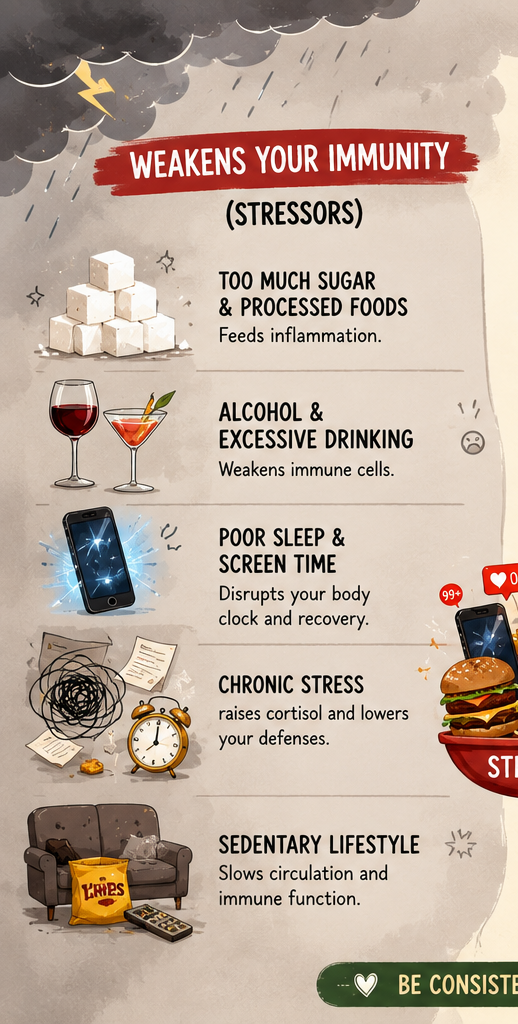
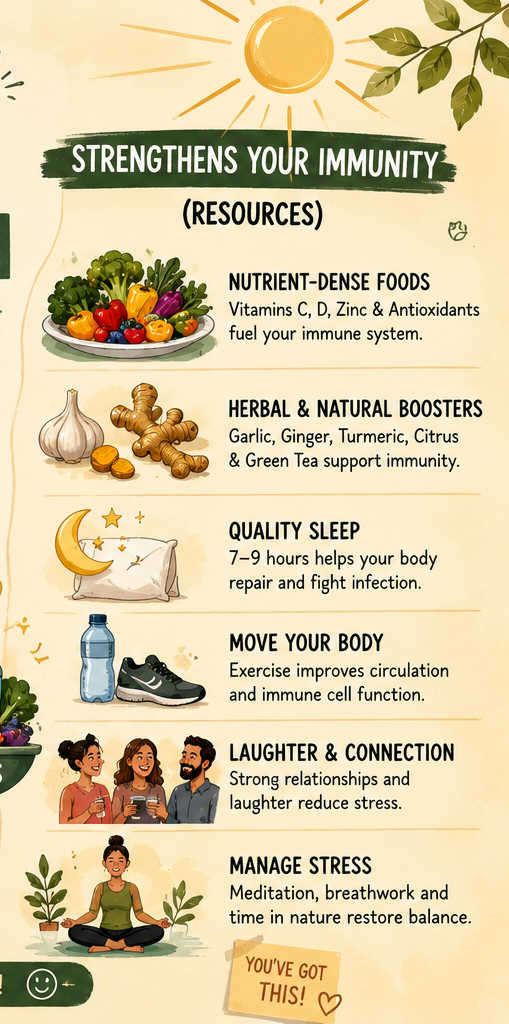
Your health is a balancing act between Resources (things that strengthen you) and Stressors (things that break you down). When your stressors exceed your resources, your defenses crumble.
Here is the Juicy Tipz guide to understanding your body’s defense lines and the three pillars you need to support them.
What Actually Is the Immune System?
Think of your body as a fortress. The immune system’s only job is to distinguish between “Self” (you) and “Non-Self” (invaders). It does this through four distinct layers of defense:
- The Barriers: These are the physical walls. This includes your skin, the sticky mucus in your lungs that traps bacteria, and your stomach acid. Fun Fact: Healthy stomach acid is almost as strong as battery acid—strong enough to kill most pathogens instantly!
- Innate Immunity: The security guards. These are cells (like phagocytes) that act fast. They don’t know exactly what the invader is, but they know it doesn’t belong, so they attack immediately.
- Adaptive Immunity: The special forces. This takes longer to kick in, but it “learns.” It creates antibodies specifically designed to target a specific virus. This is how you develop long-term immunity.
- Support Systems: The cleanup crew. This includes your Lymphatic System (which filters out dead debris) and your Microbiome (trillions of gut bacteria that act as a barrier against bad bugs).

The 3 Pillars of Immunity: How to Stay Healthy
To keep those four defense systems running, you need to manage your resources across three areas: Chemical, Structural, and Emotional.
The 3 Pillars at a Glance
| Pillar | What it supports | Resources (do) | Stressors (avoid) |
|---|---|---|---|
| Chemical Health | Nutrition and the gut — the interface of your immune system | Quality proteins and healthy fats; leafy greens and non-starchy vegetables; Vitamin C, Vitamin D, Zinc, garlic, ginger, turmeric | Sugar, white flour, industrial seed oils, pesticides, aluminum, and heating food in plastic |
| Structural Health | Circulation — how well your immune system flows | Walking, hiking, light resistance training, good posture, brief HIIT | Excessive high-intensity training, which can lower immunity by increasing stress; slumping at a desk |
| Emotional Health | The mind-body connection — stress suppresses immune function | 7-8 hours of sleep, winding down with the sun, avoiding blue light, joy, and social connection | Chronic stress, anger, fear, taking yourself too seriously, and isolation |
1. Chemical Health: Nutrition & Gut
This is about what you put in your body. Remember: Food is information.
The “Do” List (Resources):
- Build a Foundation: Focus on quality proteins (meat, fish, poultry) and healthy fats (butter, coconut oil, olive oil).
- Eat the Rainbow: Load up on leafy greens and non-starchy vegetables.
- The “Final Touch” Boosters: Once your diet is solid, add immune supporters like Vitamin C, Vitamin D (sunlight is best!), Zinc (pumpkin seeds are great), and anti-bacterials like garlic, ginger, and turmeric.
- Gut Check: Your gut is the interface of your immune system. If you suffer from bloating, consider looking into a FODMAP diet temporarily to starve out bad bacteria while you rebuild your microbiome.
The “Don’t” List (Stressors):
- Processed Junk: Sugar, white flour, and industrial seed oils are massive inflammatory burdens.
- Toxins: Reduce exposure to pesticides (buy organic when you can) and aluminum (try not to cook with foil).
- Plastic Warning: Never heat food in plastic containers! The toxins released can interfere with your body’s chemical balance.
2. Structural Health: Move Your Body
Believe it or not, how you move dictates how well your immune system flows.
- Moderate is Key: You don’t need to kill yourself at the gym. In fact, excessive high-intensity training can actually lower immunity by increasing stress. Focus on walking, hiking, or light resistance training.
- Check Your Posture: Slumping over a desk compresses your organs and restricts blood flow. Good posture allows your support systems to circulate freely.
- Short Bursts: Occasional High-Intensity Interval Training (HIIT) for just a few seconds can stimulate the system, but keep it brief to avoid burnout.
3. Emotional Health: The Mind-Body Connection
We often separate the mind from the body, but stress is a physical chemical reaction that suppresses your immune function.
- Sleep with the Sun: Aim for 7-8 hours. Try to wind down when the sun goes down. Avoid blue light (phones, TV) before bed, as it tricks your brain into staying “revved up.”
- Lighten Up: It sounds simple, but joy is a resource. Anger, fear, and taking yourself too seriously are stressors. Schedule fun into your week just like you schedule meetings.
- Connect: Humans are social creatures. Isolation weakens us. Join a club, a choir, or just call a friend.
Bonus Tipz: Natural Therapies
Want to take it a step further? Try these natural therapies:
- Hot & Cold Therapy: Start with a hot shower or sauna, then finish with a blast of cold water. The contrast creates a short-term stress that actually strengthens the immune system.
- Aromatherapy: Essential oils like Eucalyptus and Lavender in a diffuser can help clear airways and calm the nervous system for the whole family.
- Get Into Nature: It combines all three pillars. You get Vitamin D (Chemical), movement (Structural), and stress relief (Emotional) all at once.
Frequently Asked Questions
What are the 3 pillars of immunity?
Chemical health (nutrition and gut), structural health (movement and posture), and emotional health (the mind-body connection). Keeping your four defense systems running means managing your resources across all three areas.
How can I strengthen my immune system naturally?
Build consistent daily habits rather than chasing perfection: eat real food, move your body, sleep well, and stop stressing. Immunity is about tipping the scale so your Resources (things that strengthen you) always outweigh your Stressors (things that break you down).
What foods support the immune system?
Focus on quality proteins (meat, fish, poultry) and healthy fats (butter, coconut oil, olive oil), and load up on leafy greens and non-starchy vegetables. Once your diet is solid, add immune supporters like Vitamin C, Vitamin D (sunlight is best), Zinc (pumpkin seeds are great), and anti-bacterials like garlic, ginger, and turmeric.
Does exercise boost or weaken immunity?
Moderate movement — walking, hiking, or light resistance training — supports immunity, but excessive high-intensity training can actually lower it by increasing stress. Occasional short bursts of HIIT can stimulate the system; keep it brief to avoid burnout.
How much sleep do you need for a healthy immune system?
Aim for 7-8 hours, and try to wind down when the sun goes down. Avoid blue light from phones and TV before bed, because it tricks your brain into staying “revved up.”
Does stress affect the immune system?
Yes. Stress is a physical chemical reaction that suppresses immune function. Joy is a resource, while anger, fear, and taking yourself too seriously are stressors — so schedule fun into your week just like you schedule meetings, and stay socially connected, because isolation weakens us.
The Bottom Line
There is no magic pill. Immunity is about tipping the scale so that your Resources always outweigh your Stressors.
Eat real food, move your body, sleep well, and stop stressing. Your body knows what to do—you just have to give it the tools to do it.